When listening think old farmer and the connection with basic human need and emotion. From this human experience it was interesting me to apply flood imagery, catastrophe and cataclysm. In that the need for grace both in the broad sense and at the basic human level is appropriate. There is a hint of hope, however justified that hope is depends upon the narrative of the song and the one listening. The focus on “fullest time” and the conquering can be ultimately or particularly. But either way “fullest time” happens now and then.
I wrote and recorded this early yesterday morning, so my voice has an interesting gruffness in it but it also gives out a little at the end. This might be an endearing thing. Give it a listen, and let me know what you think!
It is called:
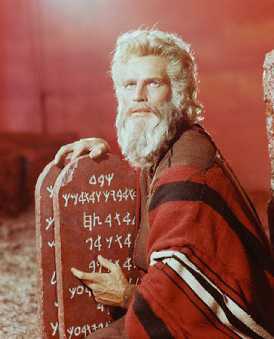 This week when our little house church gathered for a meal and some reflection, Christina Miller shared with us some thoughts on Numbers 11 and Isaiah 43. The passages reference the Exodus in remembrance and analogy for God’s current action with his people (Isa 43) and a remembrance within the actual Exodus of the faithful action of God on one side and the Israelites remembering all that they had left behind on the other (Num 11). For our purposes, let's begin by trying to not remember Exodus in terms of Charlton Heston.
The people grumbled:
The rabble among them had a strong craving; and the Israelites also wept again, and said, “If only we had meat to eat! We remember the fish we used to eat in Egypt for nothing, the cucumbers, the melons, the leeks, the onions, and the garlic” (Num 11:4-5, NRSV).
It is easy to look back on these stories and fault the Israelites for failure to keep their eye on the prize. How could they not remember what just happened and the great works that we read about in earlier sections of the narrative? However, I wonder how different our responses would be to the situation. First, it is easy to underestimate the rigors of such a journey. Second, it is also easy to forget what slavery does to socialize a people. Slavery was the only life they had known, it is hard to think beyond it. Though they were oppressed and forced to work hard labor, there was a security in that slavery.
There is something about a “slave mentality” that creates a certain limitation of belief. First, if you know no other life, it is sometimes hard to do the hard work of redefining all the things that you have depended upon. This is often the case with our own destructive behaviors. It is hard to re-imagine our lives apart from what we have always known. It is easy to profess “cognitive” faith, but it is much harder to live out of that faith open to the possibilities of how things could be different. There is comfort in the old existence when push comes to shove. It provides stability regardless of how oppressive that stability can be.
Second, a “slave mentality” often causes us to see the past through rose-colored classes so to speak. The grumble of the Israelites was not the desire to return to grueling work and oppression under a foreign king. Instead they remembered the cucumbers. How often do we remember the cucumbers and not the whip? (Hey, that's good! Maybe I should have titled this post "Cucumbers and the Whip.") Remembering can be selective in times when your world seems to be foreign and out of whack. It is easy to not remember the mighty acts of God when the moment is creating nothing but meaninglessness. It is not so much a problem of remembering but of remembering correctly. The longing for the security of what we have known and the structures that provided meaning often causes us to recast what we had known in terms of our longing for stability and security.
Isaiah proclaims:
I am the LORD, your Holy One, the Creator of Israel, your King. Thus says the LORD, who makes a way in the sea, a path in the mighty waters, who brings out chariot and horse, army and warrior; they lie down, they cannot rise, they are extinguished, quenched like a wick: Do not remember the former things, or consider the things of old. I am about to do a new thing; now it springs forth, do you not perceive it? I will make a way in the wilderness and rivers in the desert (Isa 43:15-19, NRSV).
As much as he says, not to remember the things of the past, he bases everything he says upon it. The past is the model of the work God is doing. The “not remembering” only means, “do not be stuck longing for what happened already.” God is doing something new and it is faithful to what he has already done. God has proven his fidelity and again will bring about an Exodus and release for all creation.
Remembering the past correctly also means remembering that God’s promises point to a future that are no longer dependent upon the past. We should not remember with nostalgia in seemingly present meaninglessness. There is something happening. There is a future to press on towards. There is a promised land to which we are destined. And that promised land gives meaning and structure to what we have now.
At times, our current longings can be a crisis of imagination, but at the same time we should be able to enter into David’s lament: “My God why have you forsaken me?” (Ps 22). This is real suffering, but the answer is not to go back to the stability of oppression but to remember the faithfulness of God, which is exactly what David does in that Psalm. The answer to our current distress is not returning to oppression but striving together for wholeness found in our reframing of the world.
So the remembering of the past must be done "properly." Was our oppression really worth the security of our own destructiveness? The present has to be considered in light of what God has done and the promises that he has based upon his past faithfulness. But the present only makes sense if we know there is hope, a goal, and fullness (a fullness of time). But make no mistake, this fullness is not some future utopia, it is the reordering of all things now: with our community and friends who support us and help us to restructure our understanding of stability and hope, the process itself in each individual of reframing her or his imagination away from oppression, and the actual reordering of the structures of the world that oppress all those around us.
A friend at this meeting (Jeff Ansloos) reminded us that memory is not something that comes naturally; you have to stop to do it. It seems to me that sometimes we live our lives full-steam and never reflect until moments of instability cause us to reassess. That is when it is the most crucial to think forward to what can be rather than backward at what seemed to fulfill.
Much Peace,
Tim


4 comments:
I always have thought song-writing as a brave act. Solid stuff, Tim.
I started to write a response to what your wrote and it got long...ha. What you wrote kicked up a lot of thoughts, but I feel its best reserved for a conversation sometime to be had in the future, my friend.
Thanks for sharing your talent and heart out in the open!
Thanks for the encouragement Sarah. I would love to hear your thoughts about it sometime.
Good stuff, Tim. Keep posting and keep writing. Good talking to you last night.
thanks, Joel. It was good talking to you as well.
Post a Comment